
Sindh
Dhabeji Special Economic Zone – A game changer

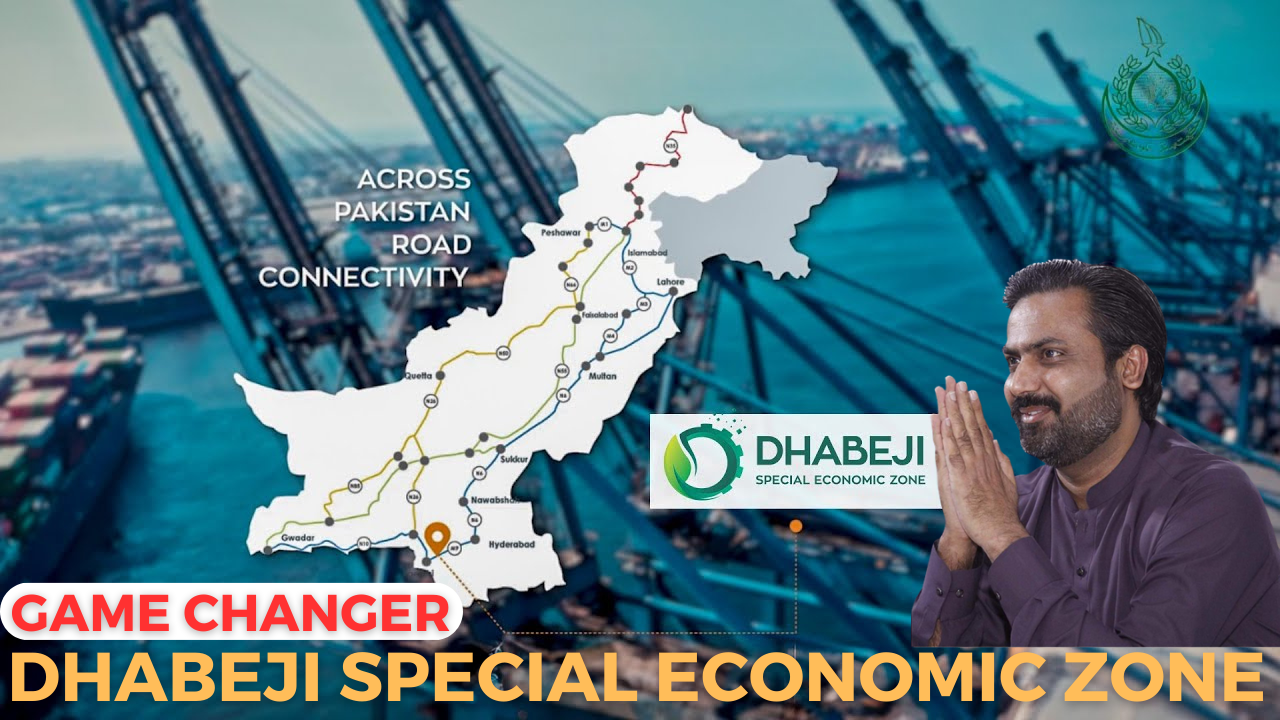
KARACHI: The development work on the Dhabeji Special Economic Zone has commenced. By inaugurating this project, Bilawal Bhutto-Zardari has taken the initial step towards realizing the aspirations of Shaheed Zulifqar Bhutto and Shaheed Benazir Bhutto. The Dhabeji Special Economic Zone project is a significant component of the China-Pakistan Economic Corridor (CPEC) and will be linked to the historic Keti Bandar, which connects to the Gwadar Port. Keti Bandar was constructed following the closure of the historic Shah Bandar, which was a significant trading hub at the time.
In Dada Sindhi’s book “Ports and Bazaars of Sindh,” it is stated that Ghulam Shah Kalhoro constructed Shah Bandar in order to engage in trade with Mughal emperor Aurangzeb Alamgir. This facilitated business activities starting from 1659 AD. Subsequently, Keti Bander was established.
During the early years of British rule, the port mentioned was highly profitable and served as a shipping point for the East India Company’s goods to Shah Bandar. Both Shaheed Bhutto and Shaheed Benazir Bhutto initiated various projects for the rehabilitation of Keti Bandar and Shah Bandar. In 1994, Benazir Bhutto also envisioned constructing a power plant using Thar coal and establishing a road network in the area. Feasibility reports were prepared, and plans were made for a power station and a port at Keti Bandar.
Now, as Keti Bandar is part of the China-Pakistan Economic Corridor (CPEC), a special economic zone has been established for the successful implementation of this project. The economic zone, known as Dhabeji Special Economic Zone, covers 1500 acres of land and aims to connect Karachi to the entire country through the Malir Expressway.
The development work of the Dhabeji Special Economic Zone is planned to be completed within 18 months. Situated approximately nine and a half kilometers from Port Qasim, this proximity adds to the value and usefulness of the project. The economic zone can serve as a storage hub for Port Qasim, facilitating efficient logistics.
Furthermore, the economic zone will be well-connected through road and railway networks, enabling the transportation of goods and materials. The zone will accommodate a range of industries, including light, medium, and heavy industries. Additionally, it will provide warehouse and logistics facilities, as well as commercial and residential plots for people seeking residences or business opportunities.
The Dhabeji Special Economic Zone aims to provide a peaceful environment for residents and businesses alike. To ensure a smooth functioning of the economic zone, an allocation of 878.5 million has been made for water supply, ensuring an uninterrupted water supply through the Dhabeji Pumping Station.
Additionally, an MoU (Memorandum of Understanding) has already been signed with Sui Southern Gas for the supply of gas to the economic zone. Furthermore, a grid station with a capacity of 250 MW will be established through a line from the National Transmission and Dispatch Company (NTDC) to provide electricity to the project. The cost of setting up this grid station is estimated to be around Rs 6.15 billion. These measures are aimed at providing essential utilities to support the smooth functioning and development of the Dhabeji Special Economic Zone.
The Dhabeji Special Economic Zone has allocated 13.5 million cubic feet per day (mmcfd) of gas supply, which will be provided at a cost of Rs 429 million. This gas supply is essential to supporting the industrial activities within the economic zone.
Furthermore, as part of the annual development plan, a dedicated road connecting the economic zone directly to Port Qasim is scheduled to be completed by 2024. This road project has a budget of Rs 2.7 billion and will be linked to the National Highway through an interchange, enhancing connectivity and facilitating the movement of goods and people.
Special packages have also been announced to incentivize people working in the economic zone. These include a one-time exemption from tax and customs duty on the import of capital goods, as well as income tax exemption for a period of ten years. These measures are designed to promote investment, boost economic activity, and attract businesses to the Dhabeji Special Economic Zone.
The Dhabeji Special Economic Zone is regarded as a flagship project of the Government of Sindh and is planned to be executed through a Public-Private Partnership (PPP) model. The feasibility study and transaction advisory for the project were completed by IBE Karachi, EA Consulting, and Rhea Barker Gilt, indicating a comprehensive planning process.
Zayed KB Builders has been selected as the successful bidder for the project, and a concession agreement has been established with them. EF Ferguson has been appointed as the project’s auditor to ensure transparency and accountability.
The economic zone is expected to attract significant investment, estimated to be around $5 billion. With such substantial investment, the project holds the potential to provide employment opportunities to approximately one lakh (100,000) individuals.
During the opening ceremony of the Dhabeji Special Economic Zone, Bilawal Bhutto-Zardari, the Chairman of the Pakistan People’s Party (PPP) and Foreign Minister, highlighted the party’s commitment to public-private partnerships for development projects. He emphasized the importance of collaboration between the government and the business community in promoting economic development and prosperity.
Bilawal Bhutto-Zardari mentioned the Thar coal project as an example of a successful public-private partnership project. He addressed the false propaganda surrounding such partnerships, emphasizing that Sindh’s public-private partnership projects have achieved success. In fact, he stated that Sindh province has been ranked sixth globally in terms of public-private partnerships.
Bilawal Bhutto-Zardari expressed optimism about the Dhabeji Special Economic Zone, emphasizing its potential to create over 150,000 employment opportunities. He stated that this initiative would contribute to alleviation of poverty and unemployment in the region.
These remarks demonstrate the PPP’s commitment to utilizing public-private partnerships to drive economic growth, create employment opportunities, and uplift the standard of living in the area.
In a 2016 CPEC (China-Pakistan Economic Corridor) meeting, approval was granted for six economic zones, one of which is the Dhabeji Special Economic Zone. Today, work is commencing on this project. The Dhabeji Special Economic Zone is strategically located, with 1500 acres of land allocated for it on a 50-year lease. Additional land will also be assigned for the zone’s expansion, contributing to the economic development of Pakistan, particularly in Karachi.
The Dhabeji Special Economic Zone holds a central position and is in close proximity to Karachi Port, Karachi Airport, Port Qasim, and the National Highway. It is expected to be a game-changer in terms of industrial development, introducing a new concept not only in Sindh but throughout Pakistan. This project is anticipated to promote economic stability and serve as a catalyst for the country’s economic growth and employment opportunities. Its significance has earned it the designation as the gateway of Pakistan.
[ The writer is Deputy Director, Information and Archives Department, Government of Sindh. He regularly contributes articles in regional and national dailies ]





ISLAMABAD: Sindh Senior Minister Sharjeel Inam Memon called on President Asif Ali Zardari at the President’s House Islamabad. Senior Minister Sharjeel Inam Memon gave a detailed briefing to President Asif Ali Zardari on several development projects in Sindh, specifically ongoing transport projects.
President Asif Ali Zardari ordered that all transport projects in Sindh be undertaken through modern technology.
President Asif Ali Zardari instructed to increase the numbers of Pink Taxi and Pink Scooty to provide special facilities to women.
President Asif Ali Zardari also said that women empowerment is our top priority, and these projects not only offer vital facilities but are also an important landmark in generating new job opportunities for women.

KARACHI: In a remarkable move, the 7th Agricultural Census 2024 – Integrated Digital Count was officially launched here on Wednesday.
The event, held in Karachi, was marked by the participation of key dignitaries, including Mr. Muhammad Ali Malkani, Minister for Livestock and Fisheries, Government of Sindh, and Syed Nasir Hussain Shah, Minister for Planning and Development and Energy, Sindh and Dr. Naeem-uz-Zafar, Chief Statistician, Pakistan Bureau of Statistics (PBS), whereas secretaries, director generals and other officers of different provincial departments also attended the launch.

Dr. Naeem-uz-Zafar, in his keynote address, emphasized the transformational nature of this census. “This is not just a data collection exercise; it is a foundation for evidence-based decision-making that will steer our agriculture sector towards sustainable growth. For the first time, we are adopting an integrated and fully digital approach, combining agricultural, livestock, and machinery censuses into a single, comprehensive operation,” he stated.
Highlighting the census’s objectives, Dr. Naeem-uz-Zafar added, “The 7th Agricultural Census will provide critical insights into Pakistan’s agrarian structure, crop patterns, livestock population, and mechanization trends. The use of advanced tools such as tablet-based data collection, GIS dashboards, and real-time monitoring ensures accuracy, reliability, and timeliness. This initiative aligns with international best practices and Food and Agriculture Organization (FAO) guidelines.”

He detailed the preparations, including the extensive training of 1,695 enumerators and supervisors across 30 venues in Sindh, to ensure the quality of data collection. He also underscored Sindh’s vital role in Pakistan’s agricultural economy, with its 8.2 million acres of cultivated land and major contributions to crops like cotton, rice, sugarcane, and wheat.
Speaking on the occasion, Muhammad Ali Malkani, Minister for Livestock and Fisheries, echoed these sentiments in his address. “This census is a historic step towards modernizing our agricultural practices and addressing the challenges of food security, climate resilience, and rural development. Sindh’s agriculture sector is the backbone of its economy, supporting 37 percent of our population. The insights gained from this census will empower policymakers to make informed decisions and drive sustainable progress,” he remarked.
The Minister also lauded the collaborative efforts between federal and provincial governments, academia, and relevant stakeholders in making this initiative a reality. “The data we collect will have far-reaching impacts, shaping policies that uplift farmers, enhance productivity, and strengthen food security,” he said.

The event also featured Syed Nasir Hussain Shah, Minister for Planning and Development and Energy, who reiterated Sindh’s commitment to supporting innovative initiatives like the Integrated Digital Count. “Our government firmly believes in using technology to address the challenges faced by our agriculture sector. This census is a critical step in achieving that vision,” he stated.
The journalists present on the occasion asked questions from the dignitaries regarding the reasons of 16 years gap since the last agricultural census, and the validation, relevancy and efficacy of this census in the face of continual climate crisis. The field operations for the census will run from January 1 to February 10, 2025, with the final results expected by August 2025. This initiative reflects dedication and cooperation between the federal and provincial governments to leveraging technology for governance and ensuring the sustainable development of the agriculture sector.


KARACHI: With an aim to lower the financial burden on the provincial exchequer, the Sindh Solid Waste Management Board (SSWMB) started to pay private companies contracted for garbage disposal in the city in local currency instead of US dollars.
In this regard, Managing Director SSWMB Syed Imtiaz Ali Shah held a meeting with representatives of the private firms responsible for disposal of garbage in the city and apprised them of the decisions made by the steering committee of the Board.
The meeting deliberated upon the new plan of garbage disposal in the city before the expiry of the contracts made with private firms for solid waste management on district West, Malir, Keamari and East.
It was informed in the meeting that the negotiation with the contracting firms for payment in local currency had already been started.
The representatives of the private firms working in district Malir, West and Keamari informed the meeting that the verification of the staff and vehicles had been completed through a third party, while the verification was still going on in district East.
The managing-director directed the officials concerned to take steps to further improve efficiency in the new operational plan.
He asked the officials to make union committee-wise operational plan, containing complete details of daily waste volume, transport, machinery, staff and all resources to further improve the door-to-door waste collection services.
He also directed the private companies to pay the salaries of their respective staff on time. Mr Shah said that the operational plan should also include training of the staff, the strategy of separate collection of waste and date of people who picked garbage illegally.


Major Dacoity

Saudi opens liquor store in Riyadh

SAMBARA INN

Sharjeel Inam Memon calls on President Asif Ali Zardari

Syed Hasan Askari – An evolution expert, a civil engineer, a lawyer, sportsman, humbled person

Rafia Javed’s journey from a village girl to an educationist, promoter for girls’ education
Sharjeel Inam Memon calls on President Asif Ali Zardari
Syed Hasan Askari – An evolution expert, a civil engineer, a lawyer, sportsman, humbled person